Care communication3 min read
A remote appointment can become frustrating when the person helping with technology also takes over the conversation. Prepare the two roles separately. A short rehearsal can establish how the patient joins, hears and speaks, while leaving the clinical discussion centered on their concerns and the provider’s actual instructions rather than the helper’s assumptions.
Read the guide ↗
Care communication3 min read
A visit can end with several instructions that sound clear in the room but become difficult to coordinate at home. Turn the written information into a short action record without rewriting the clinical plan. The useful questions are what is actually requested, who is responsible and how an unclear or missing instruction will be resolved.
Read the guide ↗
Practical support3 min read
Helping another adult with a patient portal can involve anything from enlarging text to reading a private message. Name the requested task before arranging access. The aim is useful assistance with clear boundaries, using the service’s actual caregiver or proxy process where appropriate rather than treating a shared password as the default solution to every difficulty.
Read the guide ↗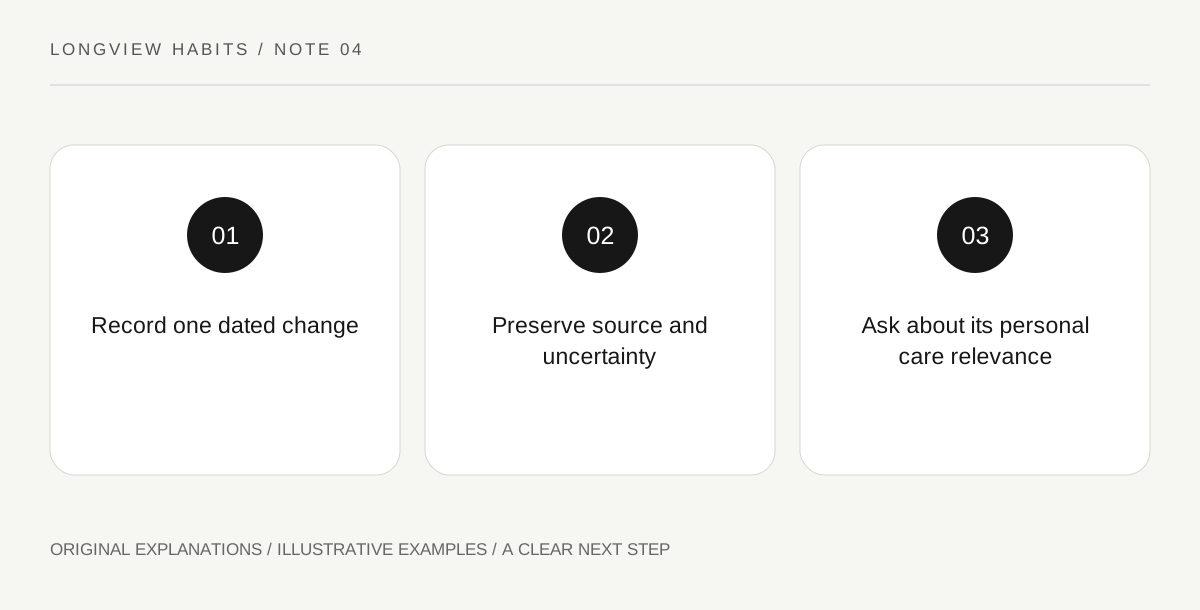
Care communication3 min read
A family health history can become outdated because updating it feels like a large genealogy project. Use a small dated change note when relevant information becomes available. The purpose is to give a clinician accurate context with uncertainty preserved, without diagnosing relatives, inferring an inherited condition or asking a family member to disclose more than they want to share.
Read the guide ↗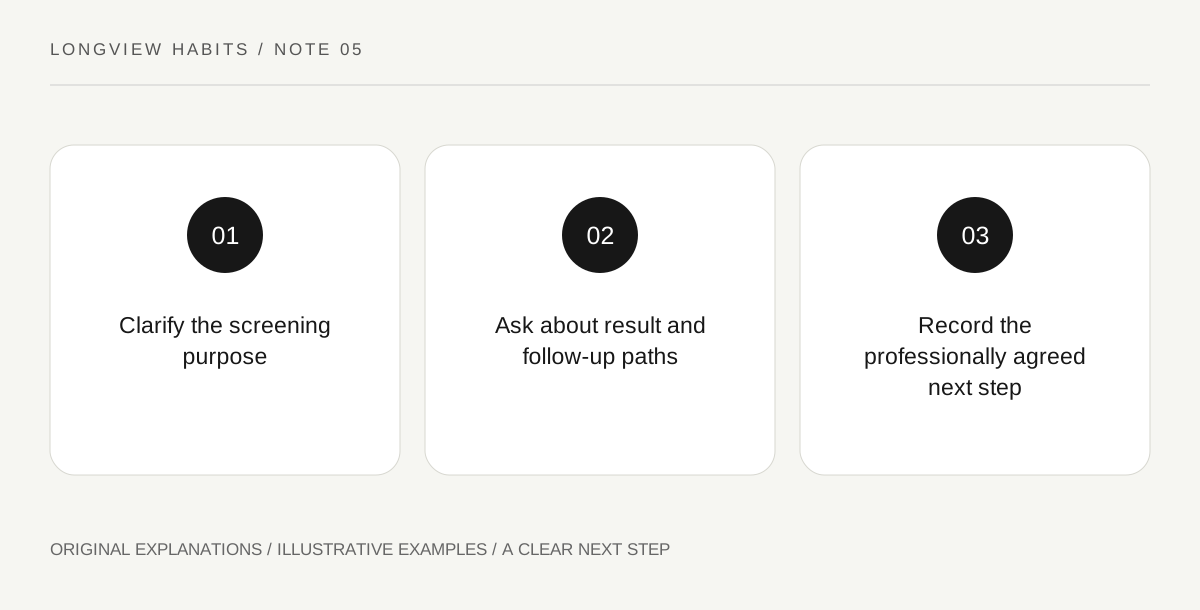
Care communication3 min read
A screening invitation can sound like a diagnosis has already been suggested, or like a normal result will settle every concern. Begin by asking what the test is intended to do for you. A short question sheet can distinguish preventive screening from investigation of a current problem, while leaving the actual decision and interpretation with the appropriate clinician.
Read the guide ↗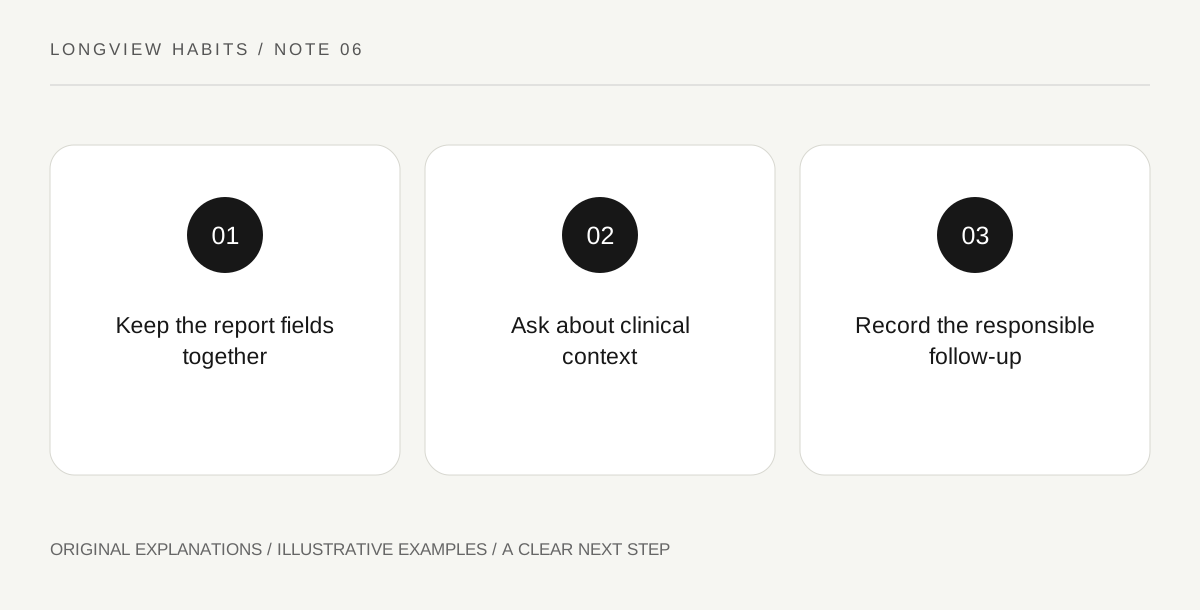
Care communication3 min read
A colored flag beside a laboratory result can feel like a complete judgment about health. Keep the result attached to its unit, reference range and clinical context before drawing conclusions. The useful task is to prepare a precise question for the ordering clinician, not to turn a report into a biological-age score or an instruction to start supplements.
Read the guide ↗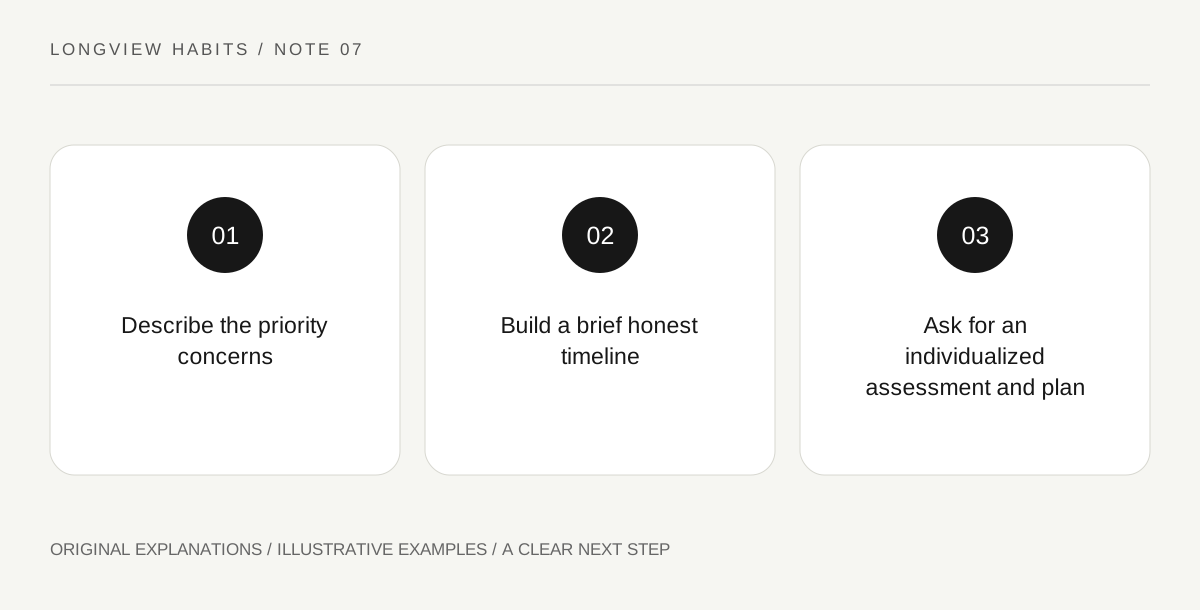
Life transitions3 min read
A familiar menopause label can help start a conversation while also making it tempting to explain every change through one cause. Prepare a short timeline of the concerns that matter to you and bring it to a qualified clinician. The purpose is accurate communication and appropriate assessment, without self-diagnosis, hormone selection or a promise that one intervention restores youth.
Read the guide ↗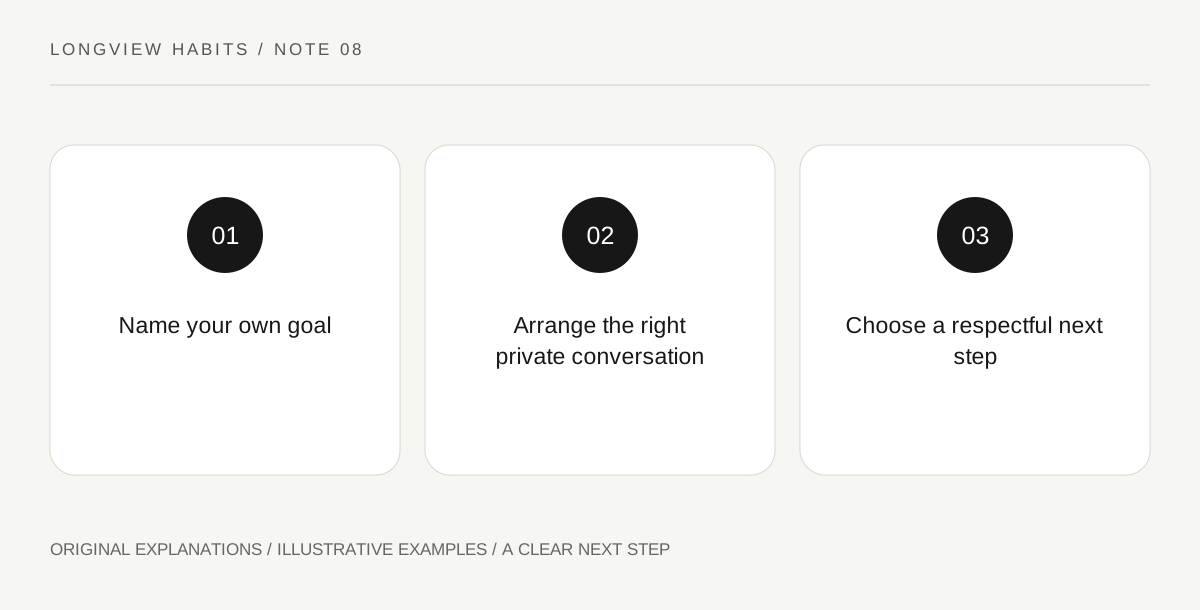
Life transitions3 min read
Sexuality and intimacy do not have to follow one compulsory pattern as people age. If you want help with a change or question, begin with your own goal and a private conversation rather than a performance promise from a product. This guide concerns adult communication and appropriate care, with no technique instructions, diagnosis or expectation that everyone wants the same kind of relationship.
Read the guide ↗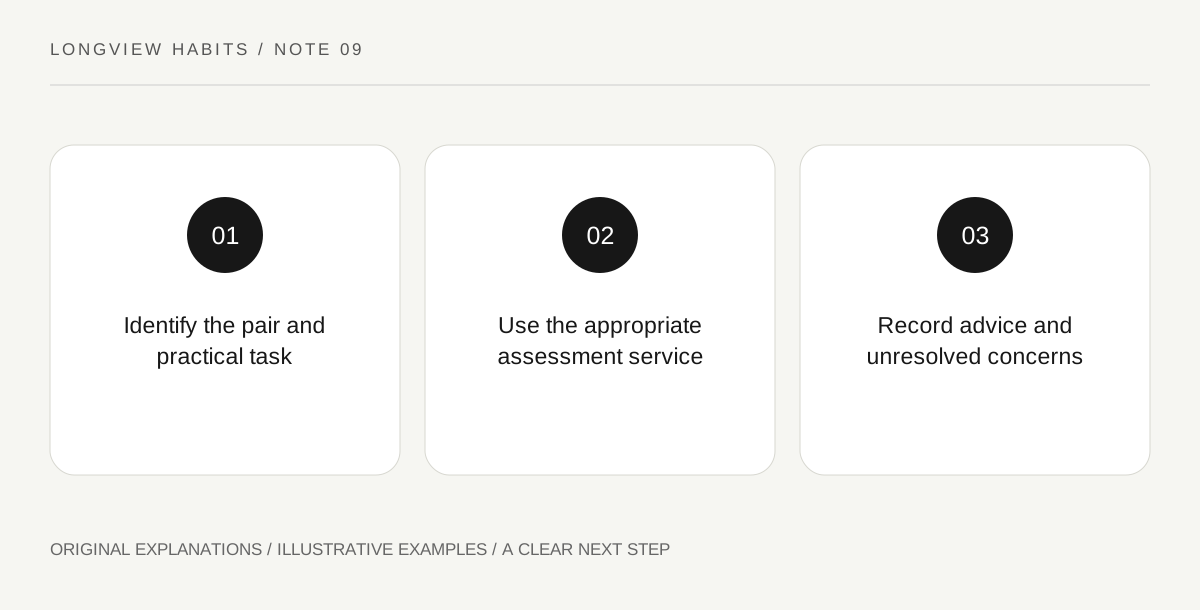
Everyday function3 min read
A vague request for shoes for my age can lead to a generic purchase while the actual problem remains unexplained. If footwear is difficult or uncomfortable, prepare the specific pair, task and question for an appropriate professional. The aim is to make the real combination visible, without diagnosing a foot condition or assuming a special label guarantees personal suitability.
Read the guide ↗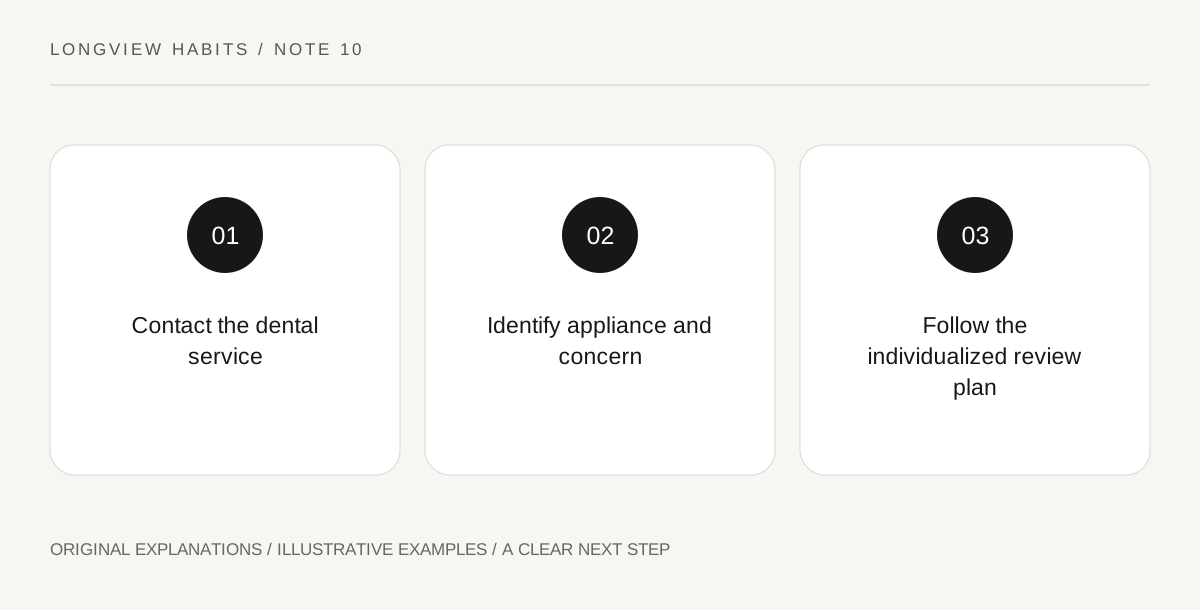
Everyday function3 min read
A denture concern can become a cycle of improvised adjustments when the more useful next step is a clear dental follow-up. Prepare the actual appliance identity, the dentist’s instructions and a brief description of the difficulty. The goal is to support an appropriate review, without treating a household fix or a stronger product as a substitute for professional assessment.
Read the guide ↗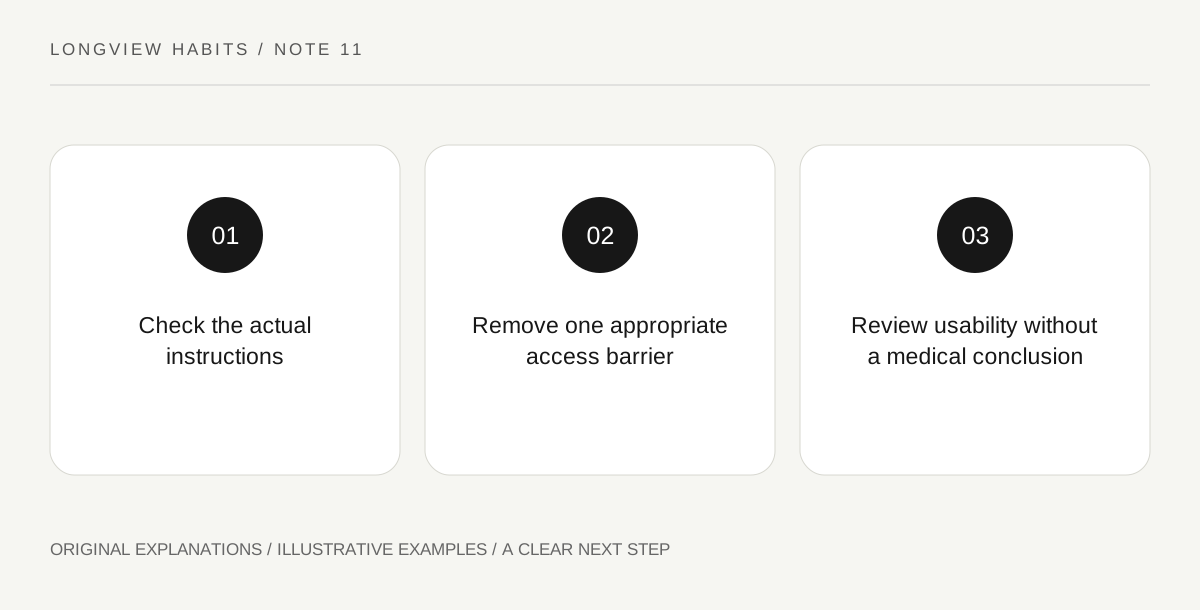
Everyday function3 min read
A reminder to drink can miss the practical reason a beverage is difficult to obtain or use. Review access, the container and any personal clinical instructions before inventing a daily target. The aim is a usable arrangement for an ordinary day, with no universal fluid amount, hydration diagnosis or instruction to override a restriction supplied by a health professional.
Read the guide ↗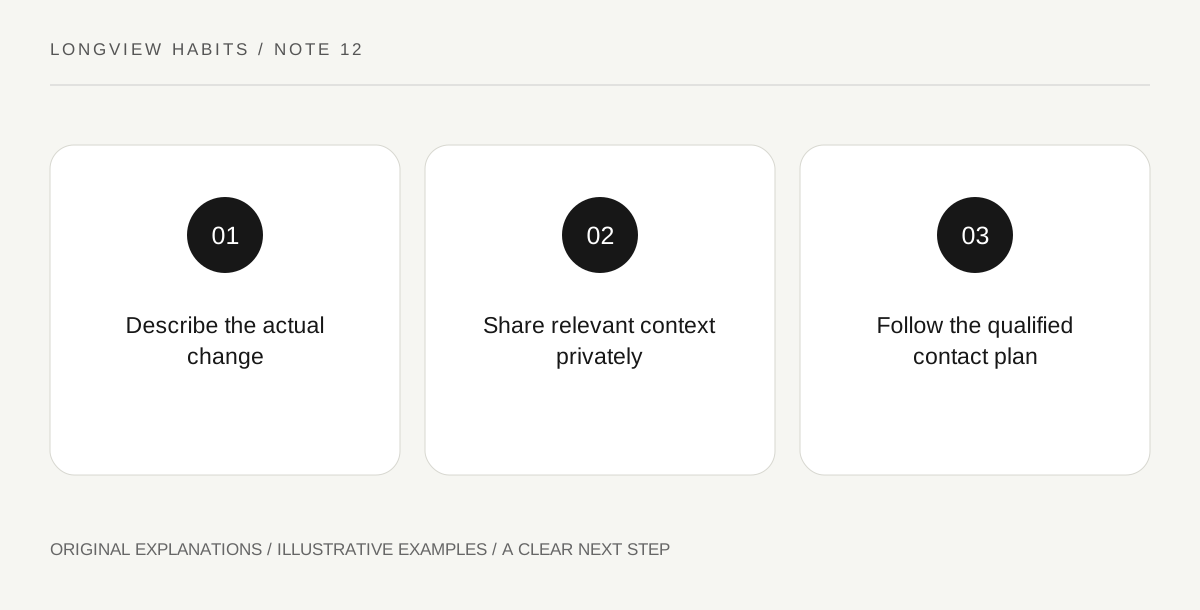
Care communication3 min read
A bowel concern can be difficult to raise, especially when advertisements offer an apparently simpler cleanse or reset. Prepare a brief private description for a qualified health professional instead. The purpose is timely communication about a change, with no laxative selection, supplement plan, personal diagnosis or requirement to achieve somebody else’s idea of a normal daily pattern.
Read the guide ↗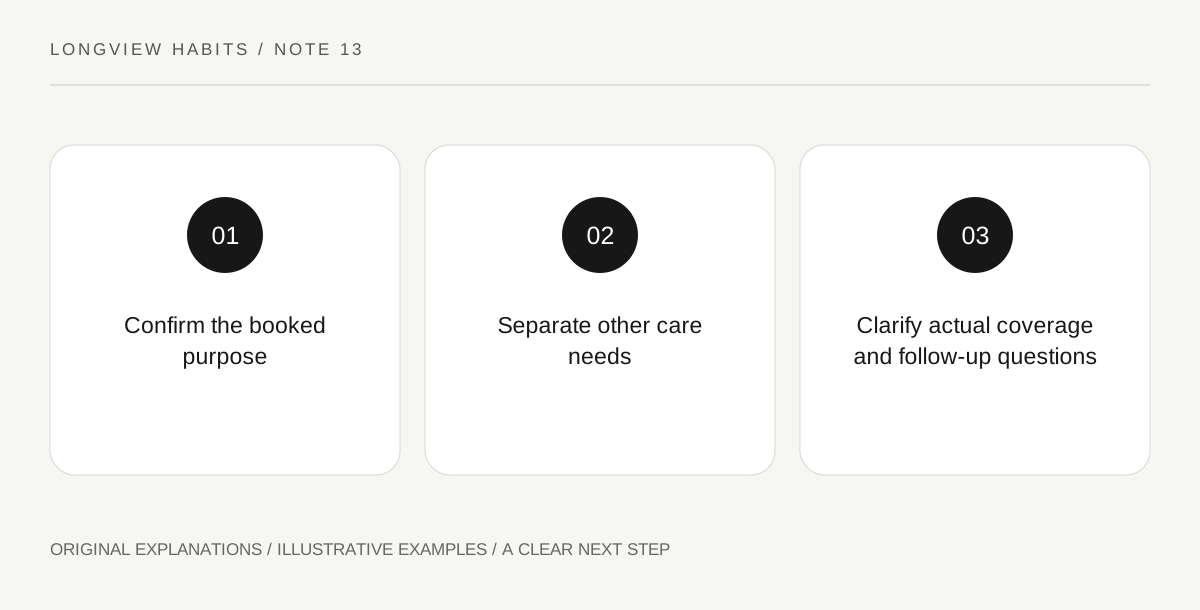
Practical support3 min read
The word wellness can make a visit sound like a routine physical, a discussion of every current concern or a guarantee that nothing can be billed. Confirm the actual appointment purpose before relying on those assumptions. This guide helps organize questions for a Medicare-related booking without determining eligibility, personal coverage or the medical services an individual needs.
Read the guide ↗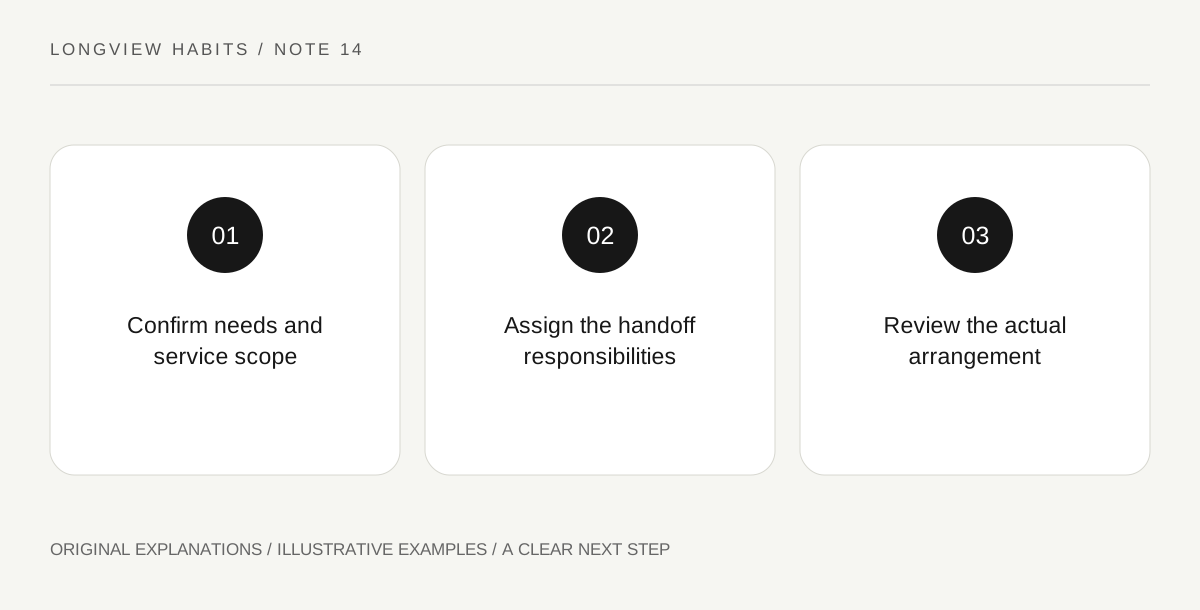
Practical support3 min read
A caregiver’s break is easier to arrange when the person providing relief knows the actual agreed role. Build a handoff around the person receiving care, the support provider’s confirmed scope and the responsible contacts. The aim is a clear temporary arrangement, without assuming that willingness to help automatically supplies clinical training or permission for every task.
Read the guide ↗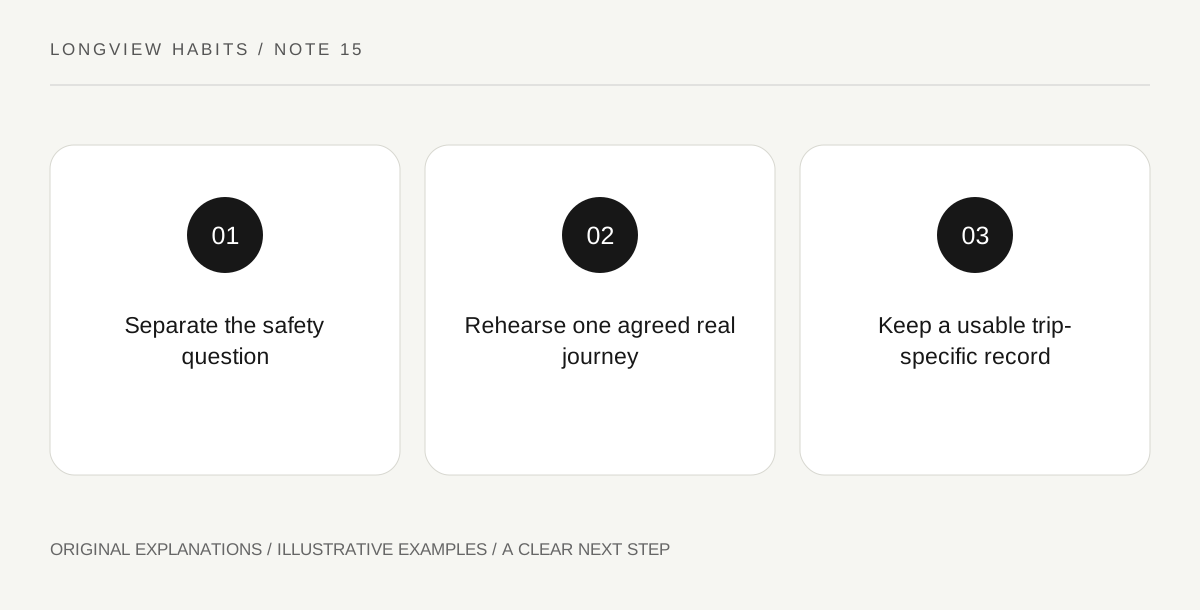
Everyday function3 min read
A conversation about transport can become stuck between continuing to drive everywhere and imagining complete dependence. Explore one actual alternative trip as a practical service question. The exercise concerns booking, pickup, access and return arrangements; it does not assess driving fitness, authorize continued driving or replace professional advice about a safety concern.
Read the guide ↗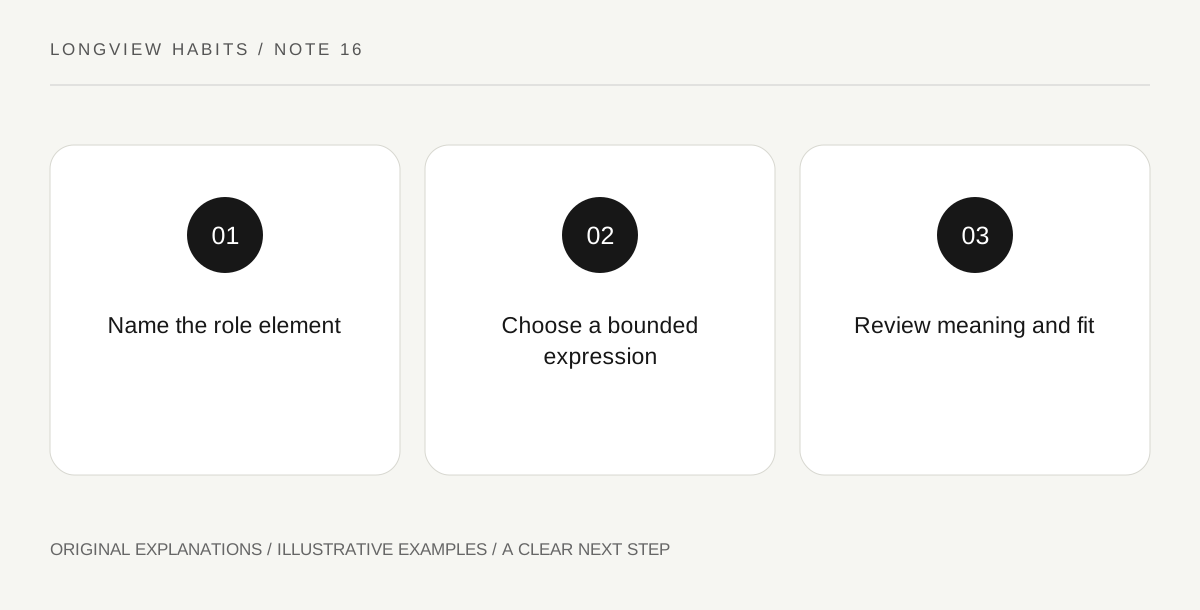
Life transitions3 min read
An empty work slot does not always mean the same thing as a missing sense of purpose. After retirement or another role change, identify what the former role actually provided before adding commitments. The exercise is a personal planning tool, with no demand to remain productive every hour and no promise that a busy schedule prevents illness or reverses aging.
Read the guide ↗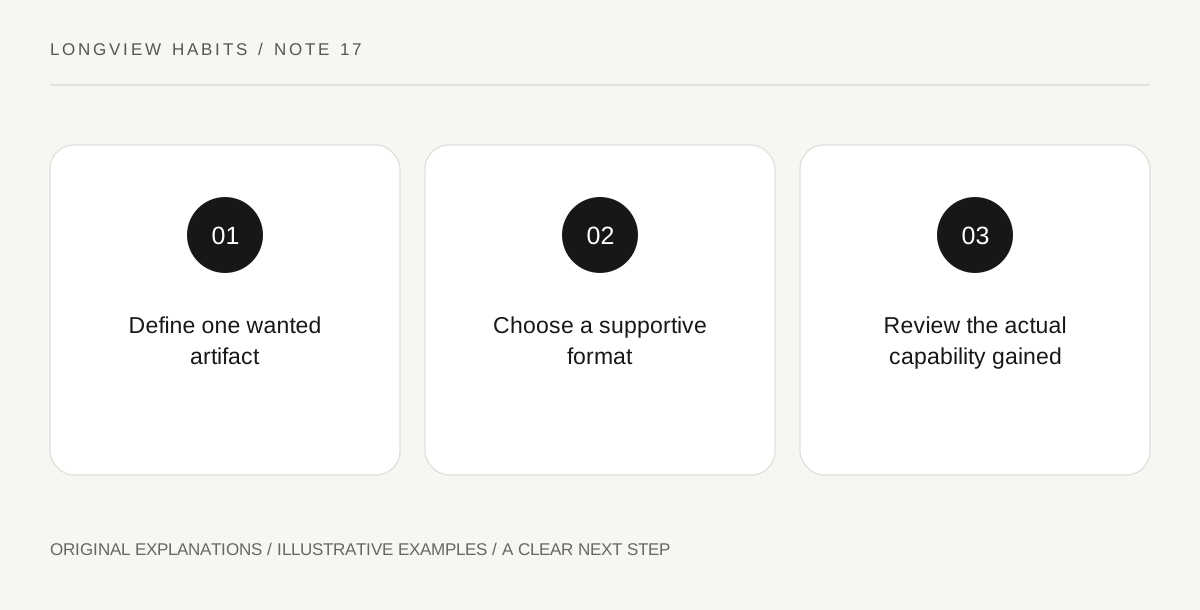
Everyday function3 min read
Learning can be worthwhile because you want to do something new, without needing a claim that the activity makes the brain younger. Define one small finished artifact and choose a learning format that supports it. The goal is a usable skill or enjoyable experience, with progress judged against the chosen task rather than an age comparison or disease-prevention promise.
Read the guide ↗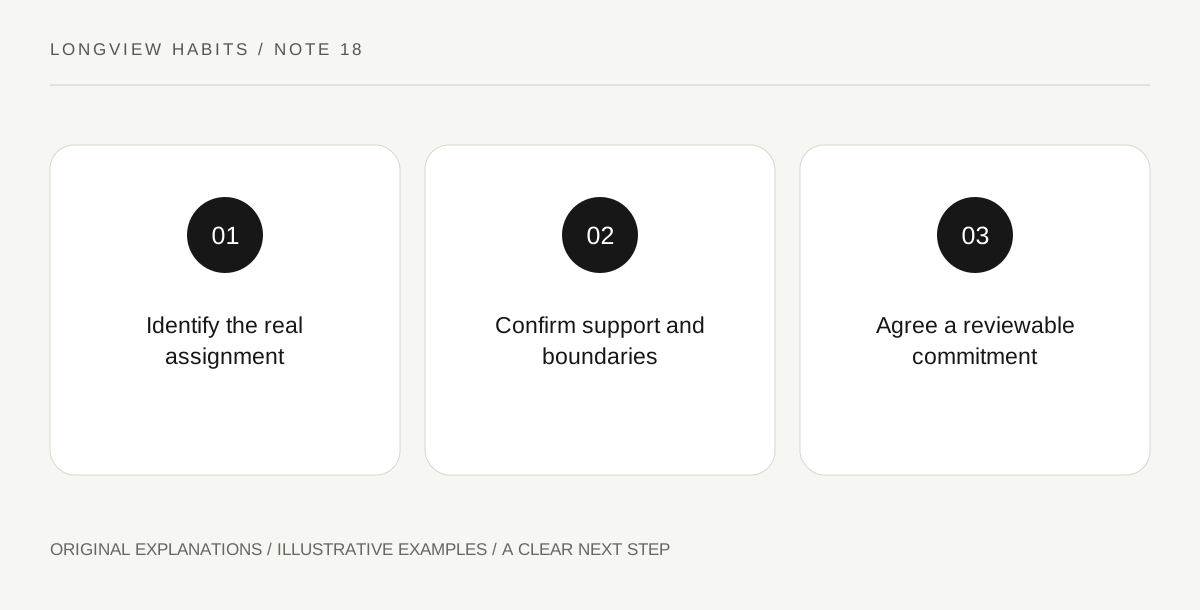
Practical support3 min read
A cause can matter to you while a particular volunteer assignment is a poor fit. Compare the role’s actual responsibilities, support and time requirements before promising a recurring commitment. The aim is a useful arrangement for both volunteer and organization, without assuming that age determines ability or that service must produce a medical benefit to be worthwhile.
Read the guide ↗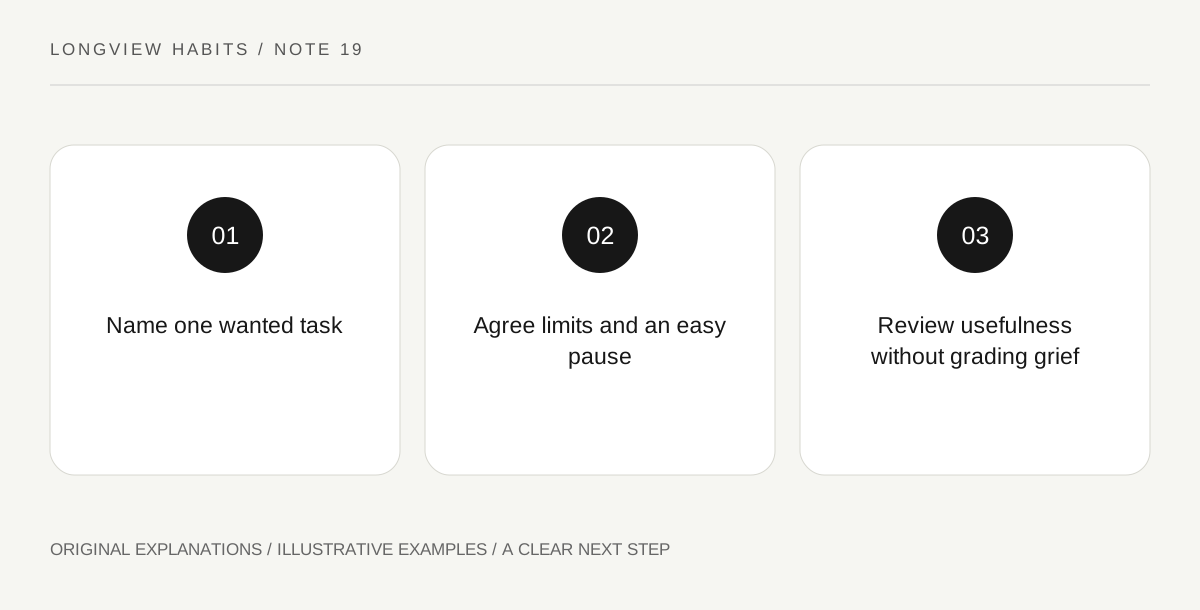
Life transitions3 min read
Grief can arrive alongside tasks that still need doing, while a broad offer to help may be difficult to turn into an actual arrangement. Name one practical need and decide who you want involved. This guide organizes assistance without prescribing a grief timeline, treating activity as a cure or asking a bereaved person to perform recovery for other people.
Read the guide ↗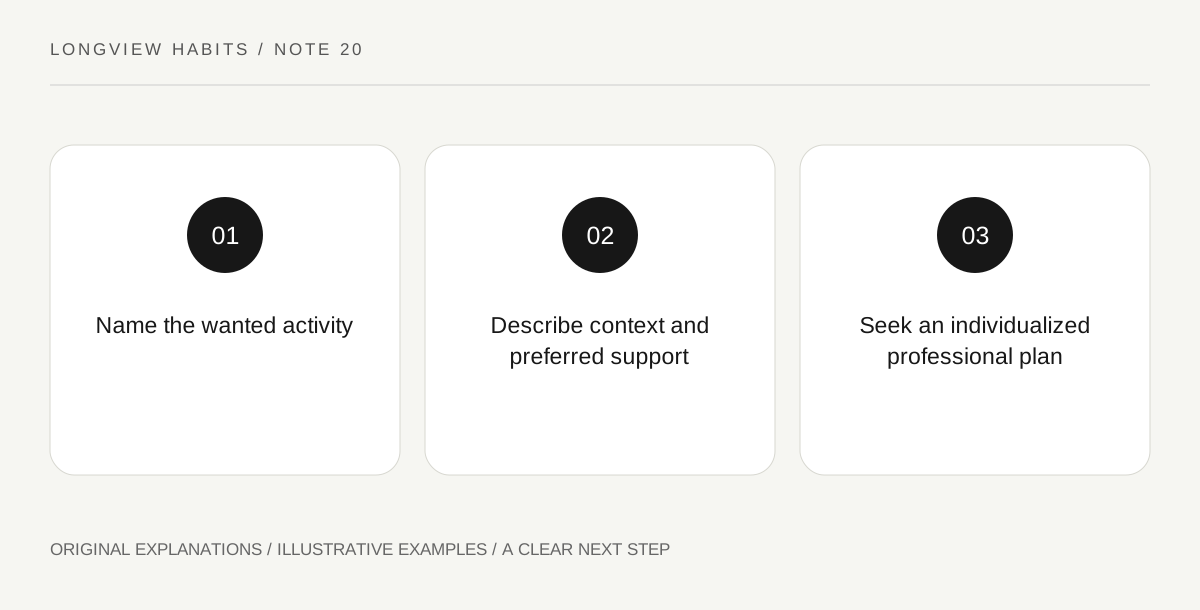
Everyday function3 min read
A difficulty with an everyday task can lead to buying several aids before anyone has established what the person wants to achieve. Prepare an occupational-therapy inquiry around a meaningful activity, its actual setting and the support already in place. The aim is a useful professional assessment conversation, with no remote device prescription or assumption that independence means doing everything without help.
Read the guide ↗