A menopause conversation: build a concern timeline without assigning every change to hormones
A familiar menopause label can help start a conversation while also making it tempting to explain every change through one cause. Prepare a short timeline of the concerns that matter to you and bring it to a qualified clinician. The purpose is accurate communication and appropriate assessment, without self-diagnosis, hormone selection or a promise that one intervention restores youth.
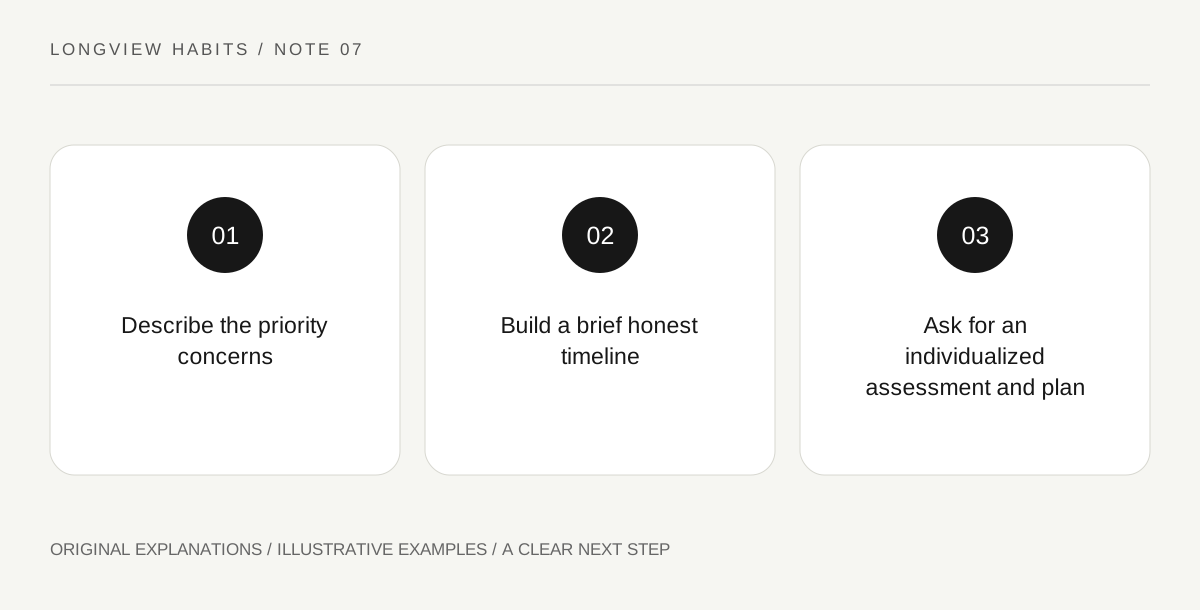
Original explanatory diagram. Read the full method and limitations below.
Use the transition as context, not a catch-all answer
NIA describes menopause as a normal life stage and notes that experiences during the transition vary. It advises discussing concerning symptoms with a health professional. Use that context to frame your question, not to settle its cause. Record the specific changes you want to discuss in ordinary language. A social-media symptom list cannot establish that every difficulty you notice belongs to the transition, and another person’s experience does not supply your own diagnosis or care plan.
Keep the timeline short and meaningful
For each priority concern, note when it began approximately, whether it changed and what practical effect prompted the appointment. Include menstrual information if relevant and requested by the provider, preserving uncertainty rather than inventing dates. The note need not become continuous surveillance of every sensation. Its role is to make the conversation clearer. Do not postpone contact while collecting a month of data, especially when a change is new, troubling or otherwise needs timely professional attention.
State the outcome you want from the discussion
Write whether you want an explanation, help with a particular difficulty or information about available options. Keep that goal separate from a request for a product seen online. If treatments are discussed, ask the clinician about the benefits, risks and suitability for your actual circumstances. This article recommends no hormone, supplement, test or dosing schedule. It also makes no claim that a blood result or a symptom checklist can independently determine the right response.
Leave with a plan you understand
Ask what follow-up is appropriate and how to raise a concern if the situation changes. Record the professional instructions without rewriting them as a generic menopause routine to share with friends. The useful outcome may be clarification, another assessment or a supported option, depending on the actual discussion. Keep the timeline as a communication aid, not a scorecard of how well you are aging. A normal life transition can deserve thoughtful care without being described as a failure to maintain a younger body.
Illustrative everyday example
Illustrative timeline: an adult selects two concerns affecting daily comfort and notes their approximate onset. Uncertain dates remain approximate. At the appointment, they explain the desired help and ask whether other assessment is needed. The resulting note records the clinician’s plan rather than an online supplement routine. No unfamiliar change is automatically attributed to hormones simply because it occurred in midlife.
Questions that come up
Does a symptom checklist establish menopause or the cause of every concern?
No. It can prompt questions, but assessment belongs with a qualified professional who understands the actual circumstances.
Does this guide recommend hormone treatment?
No. It prepares a conversation and supplies no treatment selection, dose or claim that an intervention reverses aging.
References and scope
These sources support the factual background. Examples and exercises are original illustrative teaching material. References do not imply endorsement.
- NIA: What Is Menopause? — Menopause as a normal life stage, varied transition experiences and professional discussion of concerning symptoms; no diagnosis or treatment recommendation.