Intimacy as you age: choose your own conversation goal before a product
Sexuality and intimacy do not have to follow one compulsory pattern as people age. If you want help with a change or question, begin with your own goal and a private conversation rather than a performance promise from a product. This guide concerns adult communication and appropriate care, with no technique instructions, diagnosis or expectation that everyone wants the same kind of relationship.
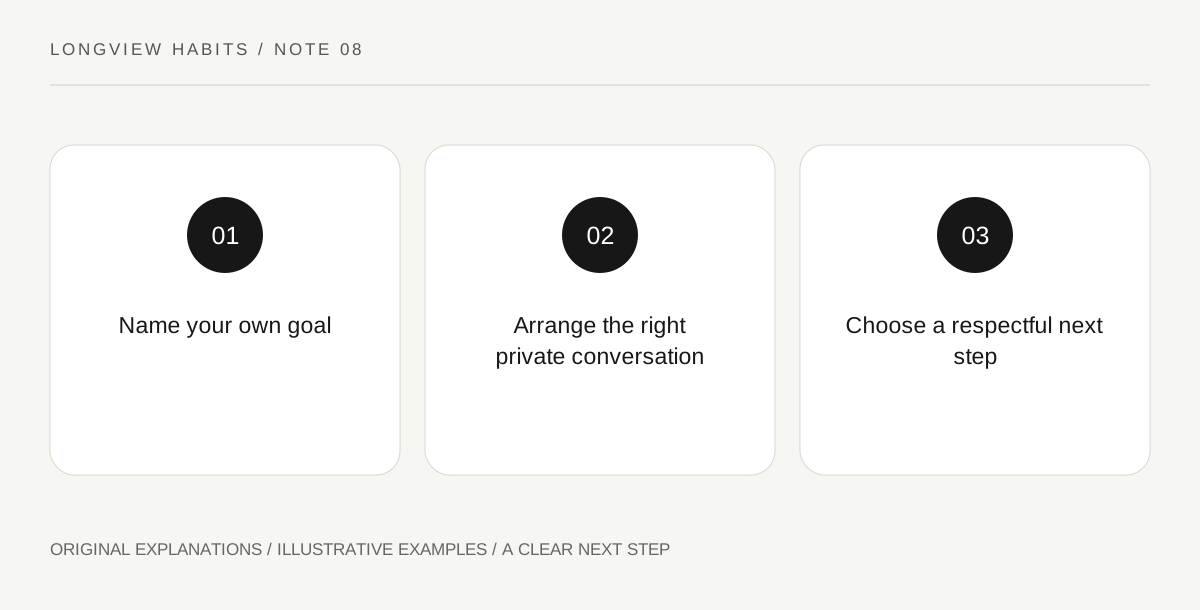
Original explanatory diagram. Read the full method and limitations below.
Keep preference distinct from a problem to solve
NIA distinguishes sexuality from intimacy and recognizes that older adults differ in whether they want either, both or neither. Start by writing what matters to you rather than comparing yourself with an advertisement or another couple. A preference for less sexual activity is not automatically a defect, while an unwanted change or discomfort can deserve professional attention. The useful distinction is between your own choice and a concern you would like help understanding.
Arrange the privacy needed for the question
If speaking with a clinician, ask how to discuss the concern privately and in a format you can use comfortably. A companion’s help with transport or paperwork does not mean they must participate in this part of the conversation. State who you want involved and follow the service’s process. Keep notes in a private place. You do not need to provide intimate details to a retailer, online group or unqualified acquaintance in order to earn permission to ask a health professional a straightforward question.
Describe the concern without buying its advertised explanation
Use plain language about what changed, what is unwanted and what help you want. If a product or treatment has been suggested elsewhere, bring its identity as a question rather than assuming its marketing has established the cause. Do not alter prescribed care or start a sexual-performance product from this article. Health conditions, medicines and personal circumstances require qualified review. The aim is an accurate conversation, not demonstrating that you can restore a particular frequency, appearance or age-associated benchmark.
Keep relationship communication respectful
Where a partner is involved, discuss preferences and boundaries without pressure or a promise that a purchase will solve the relationship. Agreement and ongoing consent remain central. A person can seek clinical advice separately from a partner discussion, and the two conversations need not happen on the same schedule. End with one practical next step that fits the actual concern. The outcome may be a private appointment or a clearer expression of preferences, rather than any change in activity.
Illustrative everyday example
Illustrative conversation: an adult wants to discuss an unwanted change but does not want a companion present for that portion of an appointment. They arrange privacy, describe the concern plainly and bring a product name only as a question. Their partner discussion focuses on preferences and boundaries. No performance target is imposed, and no treatment is started from an advertisement or this worksheet.
Questions that come up
Is sexual activity a required measure of healthy aging?
No. The cited guidance recognizes different preferences. This article imposes no frequency or activity requirement.
Can a marketed performance product identify the cause of a change?
No. Marketing does not provide an individualized assessment. Bring questions to an appropriate professional rather than treating a sales explanation as a diagnosis.
References and scope
These sources support the factual background. Examples and exercises are original illustrative teaching material. References do not imply endorsement.
- NIA: Sexuality and Intimacy in Older Adults — The distinction between intimacy/sexuality and varied preferences in older adulthood; no treatment, performance target or individualized risk claim.