After a loss: ask for one specific kind of practical help
Grief can arrive alongside tasks that still need doing, while a broad offer to help may be difficult to turn into an actual arrangement. Name one practical need and decide who you want involved. This guide organizes assistance without prescribing a grief timeline, treating activity as a cure or asking a bereaved person to perform recovery for other people.
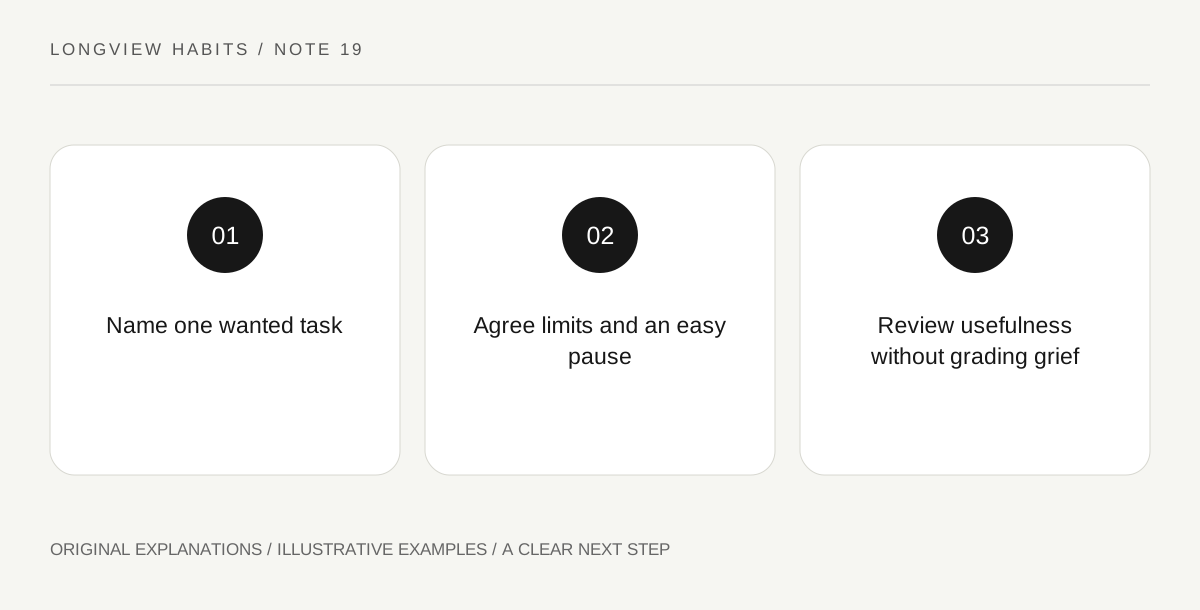
Original explanatory diagram. Read the full method and limitations below.
Separate support from a schedule for feeling better
NIA’s grief resources recognize mourning after a loved one’s death and direct readers toward support options. Use that as a starting point for seeking help, not a timetable for how someone should feel. A practical task can be addressed while grief remains. Do not rank the person’s progress by whether they accept invitations, clear possessions or return to a familiar routine. If distress or difficulty coping is concerning, seek appropriate professional support rather than relying on this planning worksheet.
Choose a task with a clear boundary
Identify one wanted form of help, such as accompanying someone to an appointment, preparing an agreed meal or sorting a small set of ordinary papers together. Keep legal, financial and medical decisions with the appropriate authorized professionals. The helper should know what is requested and what is outside the task. An offer to sit beside someone while they organize papers is not permission to make decisions, access accounts or discard items on their behalf.
Agree how the person can change their mind
Make the arrangement easy to revise. A bereaved person may want company on one day and privacy on another, without needing to justify the change through a fixed grief stage. Confirm the actual time and task, then ask how cancellation or a pause should work. Do not turn the helper’s inconvenience into pressure to continue. Practical support is most useful when it reduces a burden rather than adding an obligation to appear grateful, sociable or ready for the next step.
Review the task without evaluating the grief
Afterward, ask whether that particular help was useful and whether anything else is wanted. Keep the response concrete. A meal delivered successfully does not mean grief is resolved, and declining another visit does not establish deterioration. The outcome can simply be that one necessary task became easier. This respects the difference between practical assistance and qualified bereavement or mental-health care, while giving friends and family a way to offer support that is specific, consensual and limited enough to understand.
Illustrative everyday example
Illustrative arrangement: a bereaved adult asks a friend to accompany them to an ordinary appointment, with no account access or paperwork decisions. They agree the time and a simple way to cancel. Afterward, the review concerns whether the accompaniment helped. Nobody uses attendance as proof of recovery, and the friend does not begin clearing possessions or arranging social events without a separate request.
Questions that come up
Does accepting help mean someone should be ready for more activity?
No. Agreement to one task does not establish readiness for another or define a recovery stage.
Can practical assistance replace professional grief support?
No. It serves a different purpose. Seek appropriate qualified help when distress or coping difficulties warrant it, rather than asking a household arrangement to provide treatment.
References and scope
These sources support the factual background. Examples and exercises are original illustrative teaching material. References do not imply endorsement.
- NIA: Grief and mourning — Mourning and access to grief-support resources; no prescribed timeline, diagnosis or therapeutic claim.