An occupational-therapy inquiry: describe the task you want to keep doing
A difficulty with an everyday task can lead to buying several aids before anyone has established what the person wants to achieve. Prepare an occupational-therapy inquiry around a meaningful activity, its actual setting and the support already in place. The aim is a useful professional assessment conversation, with no remote device prescription or assumption that independence means doing everything without help.
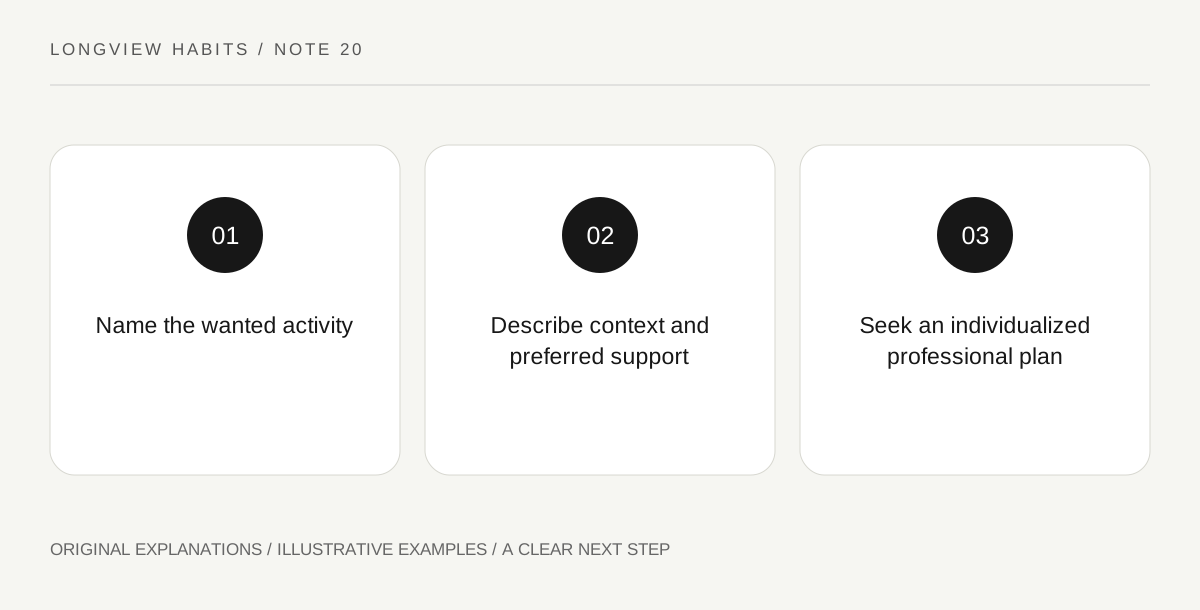
Original explanatory diagram. Read the full method and limitations below.
Begin with the activity that matters
AOTA describes occupational therapy as involving an individualized evaluation of a person’s history, interests and meaningful activities, followed by a tailored plan and review. Use that broad service description to frame an inquiry, not to decide which intervention you need. Name one actual task, such as preparing personal correspondence or participating in a familiar hobby. Explain why it matters to the person. A generic request for an aid for old age provides less useful context than a specific activity and goal.
Describe the setting without staging a test
Record where the task normally happens, the objects involved and the part that becomes difficult. Do not repeat a painful or unsafe action to demonstrate commitment to the worksheet. Ask the professional what information, photographs or items are appropriate to provide through its normal process. Keep other people’s privacy in mind when describing a shared setting. The note should help explain the real task, not become an unqualified home assessment that assigns a diagnosis or certifies the environment.
State the support the person actually wants
Ask whether the goal is doing a selected part personally, making the task less burdensome or coordinating assistance. Keep the person’s preferences distinct from a supporter’s wish for complete self-sufficiency. An appropriate plan may involve different forms of support, but this article selects none. Existing clinical instructions and equipment should be identified accurately. Do not combine or modify devices because two product descriptions sound compatible; bring that question to the responsible qualified professional.
Use the inquiry to obtain an individualized next step
Ask the service about its actual assessment process, qualifications, access arrangements and any referral or payment questions relevant to your situation. The general professional description supplies no personal coverage guarantee. After the assessment, preserve the agreed goals and review process instead of reducing the plan to a shopping list. A useful outcome is a supported way to pursue a wanted activity, with the person’s choices central and the professional responsible for the intervention rather than an article assigning a universal tool.
Illustrative everyday example
Illustrative inquiry: an adult wants to continue writing personal cards but finds one part of the task difficult. They describe the setting and existing support without repeating discomfort for a demonstration. AOTA’s broad description helps them ask a local qualified service about assessment. The goal includes doing the personally meaningful part with agreed assistance, not proving total self-sufficiency or buying an unassessed device.
Questions that come up
Does needing assistance defeat the goal?
No. The person’s preferences and the actual activity guide the discussion. A supported arrangement can be a meaningful goal without requiring every component to be done alone.
Does this article prescribe an adaptive device?
No. It prepares a professional inquiry. Device suitability, intervention and any coverage questions depend on the actual assessment and service.
References and scope
These sources support the factual background. Examples and exercises are original illustrative teaching material. References do not imply endorsement.
- AOTA: What is occupational therapy? — The individualized evaluation, meaningful-activity profile, tailored intervention and review framework; no device prescription or coverage determination.