A driving alternative: rehearse one real trip without testing driving ability
A conversation about transport can become stuck between continuing to drive everywhere and imagining complete dependence. Explore one actual alternative trip as a practical service question. The exercise concerns booking, pickup, access and return arrangements; it does not assess driving fitness, authorize continued driving or replace professional advice about a safety concern.
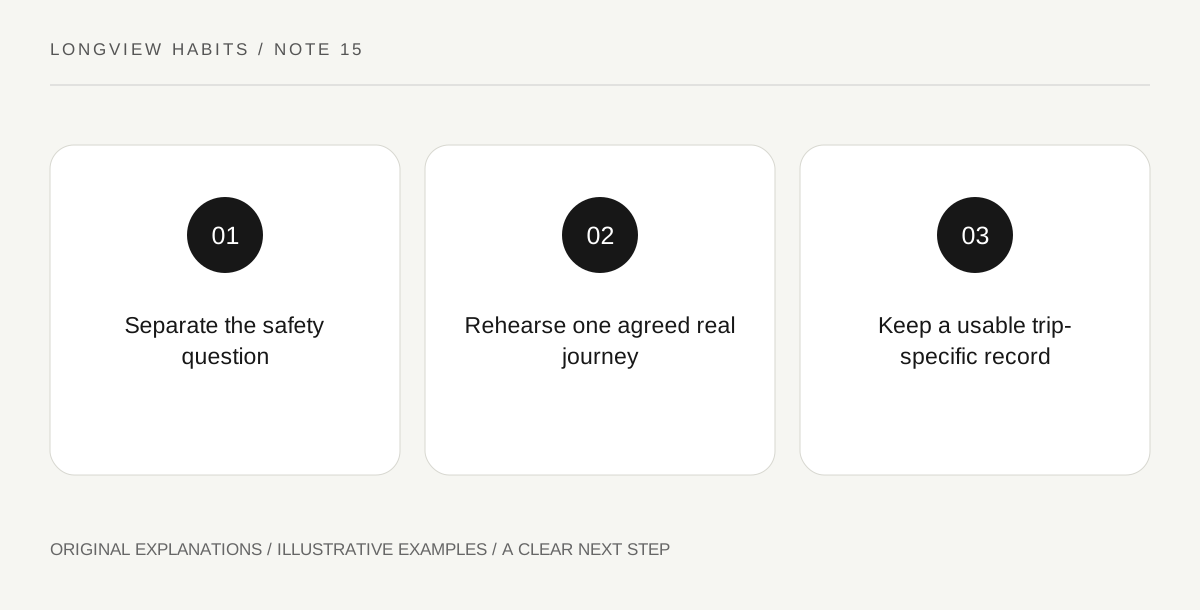
Original explanatory diagram. Read the full method and limitations below.
Keep safety assessment separate from transport planning
NIA explains that health and age-related changes can affect driving and discusses alternatives for maintaining mobility. Use that context to plan support without trying to conduct a family driving test. If driving safety is a concern, involve the appropriate qualified professionals and responsible authorities. A successful alternative trip does not answer whether someone should drive, and difficulty booking a service does not establish that driving is safe. The two questions require different information and different roles.
Choose one journey that matters
Select a real destination the person wants or needs to reach, with their agreement. Record the actual appointment or activity requirements rather than a generic drive across town. Ask the transport provider about booking, service area, assistance scope and the precise pickup arrangement. Do not assume a driver provides personal care or escorts someone into a building. Keep any mobility or assistance needs explicit through the service’s normal process so an important gap is discovered before the journey.
Arrange the return as deliberately as the outward trip
Confirm how the return is requested, where the person waits and what the provider says about changes or delays. A booked outward journey is not a complete plan. Use actual current information for costs and eligibility; this article quotes no fare or universal service entitlement. If the intended arrangement does not work for the person’s needs, seek another appropriate option rather than treating the failed match as personal incompetence. The trial is meant to reveal service requirements, not grade the passenger.
Record a usable option rather than a verdict
After the trip, note the steps the person could use comfortably and the support still needed. Keep that practical result separate from any driving assessment. The useful outcome may be a reliable option for one recurring journey rather than a replacement for every trip. A clearer transport choice can support participation and reduce all-or-nothing thinking. It should remain the person’s actual arrangement, with qualified advice addressing safety concerns and the service answering operational questions.
Illustrative everyday example
Illustrative rehearsal: an adult chooses a regular library visit and asks a transport provider about booking, pickup assistance and the return process. A supporter helps only with the agreed steps. The completed journey yields a practical instruction card for that trip. Nobody treats the result as a driving-fitness test or assumes the provider can supply unconfirmed personal assistance for a different destination.
Questions that come up
Does this exercise decide whether someone should stop driving?
No. It develops a transport option. Driving concerns require appropriate professional and regulatory processes for the actual person.
Does one successful trip mean the service fits every journey?
No. Different destinations, times and assistance needs can change the arrangement. Confirm the actual trip rather than generalizing from one trial.
References and scope
These sources support the factual background. Examples and exercises are original illustrative teaching material. References do not imply endorsement.
- NIA: Safe Driving for Older Adults — Driving can be affected by health/age-related changes and alternative transport can be considered; no fitness test, driving authorization or service entitlement.