A Medicare Wellness booking: confirm the visit’s purpose before arriving
The word wellness can make a visit sound like a routine physical, a discussion of every current concern or a guarantee that nothing can be billed. Confirm the actual appointment purpose before relying on those assumptions. This guide helps organize questions for a Medicare-related booking without determining eligibility, personal coverage or the medical services an individual needs.
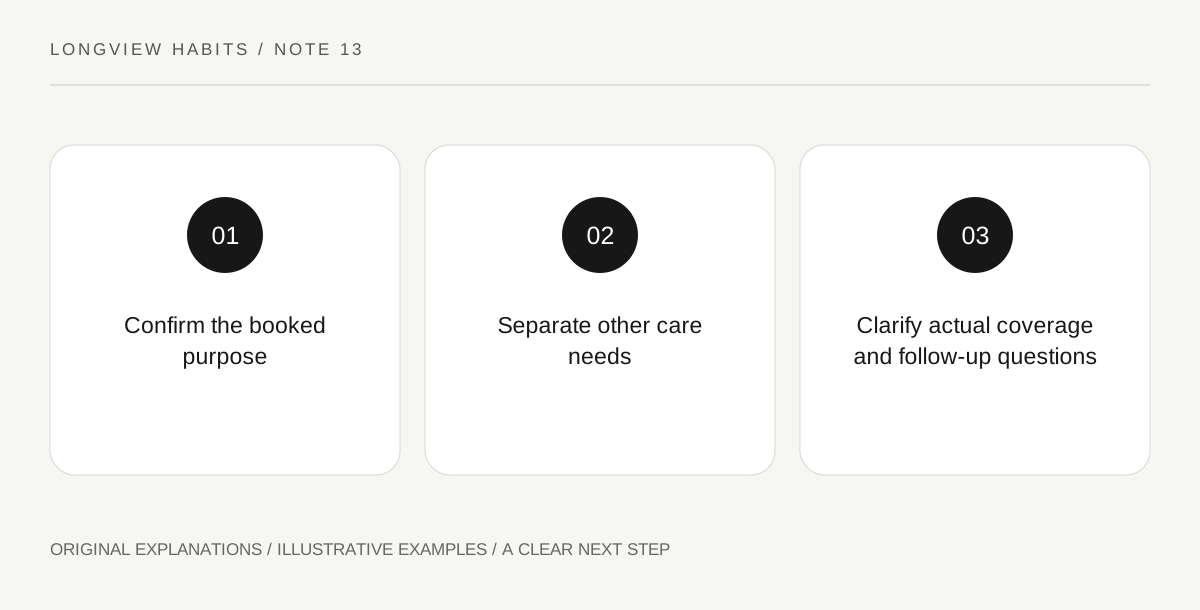
Original explanatory diagram. Read the full method and limitations below.
Read the benefit’s own description
Medicare’s official page describes the yearly Wellness visit as developing or updating a personalized prevention plan and explicitly distinguishes it from a routine physical exam. It also explains that additional services can involve costs. Those are reasons to ask a precise booking question, not a complete coverage decision for your case. Confirm the service actually scheduled and the information the practice needs. Avoid assuming that a familiar word on an appointment card establishes the same scope as a different visit you had before.
Separate prevention planning from a current concern
Tell the practice about a concern you want addressed and ask how it should be scheduled appropriately. Do not wait for a preventive appointment to raise a new or worrying symptom. The practice can explain its actual process; this article cannot decide whether two subjects belong in one encounter. Make a short list of goals and distinguish the prevention-plan conversation from other needs. This prevents a patient from arriving with an unspoken expectation that the visit’s title has already arranged every necessary assessment.
Ask the cost question with the exact service
Use the practice and the relevant Medicare or plan resources for questions about eligibility, assignment and additional services. Record whom you asked, the service described and any uncertainty still unresolved. Do not treat a general online statement as a personal guarantee or decide to decline needed care based on an incomplete worksheet. The point is to identify the actual question before the encounter, so a service distinction does not remain hidden behind the broad and reassuring word wellness.
Keep the resulting plan usable
After the visit, preserve the provider’s prevention plan and clarify who arranges the next steps it identifies. Leave medical timing and service selection with qualified advice. A supporter may help organize documents with permission, but should not turn the plan into an independent screening schedule for another person. The practical outcome is a more understandable encounter: its purpose, remaining questions and responsible contacts are clear. That supports participation in care without promising that one visit measures the success of aging or covers every health issue.
Illustrative everyday example
Illustrative call: an adult asks whether the scheduled Medicare Wellness appointment is the prevention-planning service or a routine physical. They separately describe a current concern and ask the practice how it should be addressed. A coverage question about an additional service remains marked unresolved until the appropriate source answers. The resulting notes contain no blanket promise that every part of the encounter will have no cost.
Questions that come up
Is the yearly Wellness visit a routine physical exam?
Medicare’s official description distinguishes the two. Ask the practice what is booked and how your particular needs should be addressed.
Does this article guarantee that no cost can arise?
No. The official page notes that additional services may involve costs. Obtain information for the actual service and coverage situation.
References and scope
These sources support the factual background. Examples and exercises are original illustrative teaching material. References do not imply endorsement.
- Medicare.gov: Yearly Wellness visits — The prevention-plan purpose, distinction from routine physicals and possible costs for additional services; no personal eligibility or billing determination.